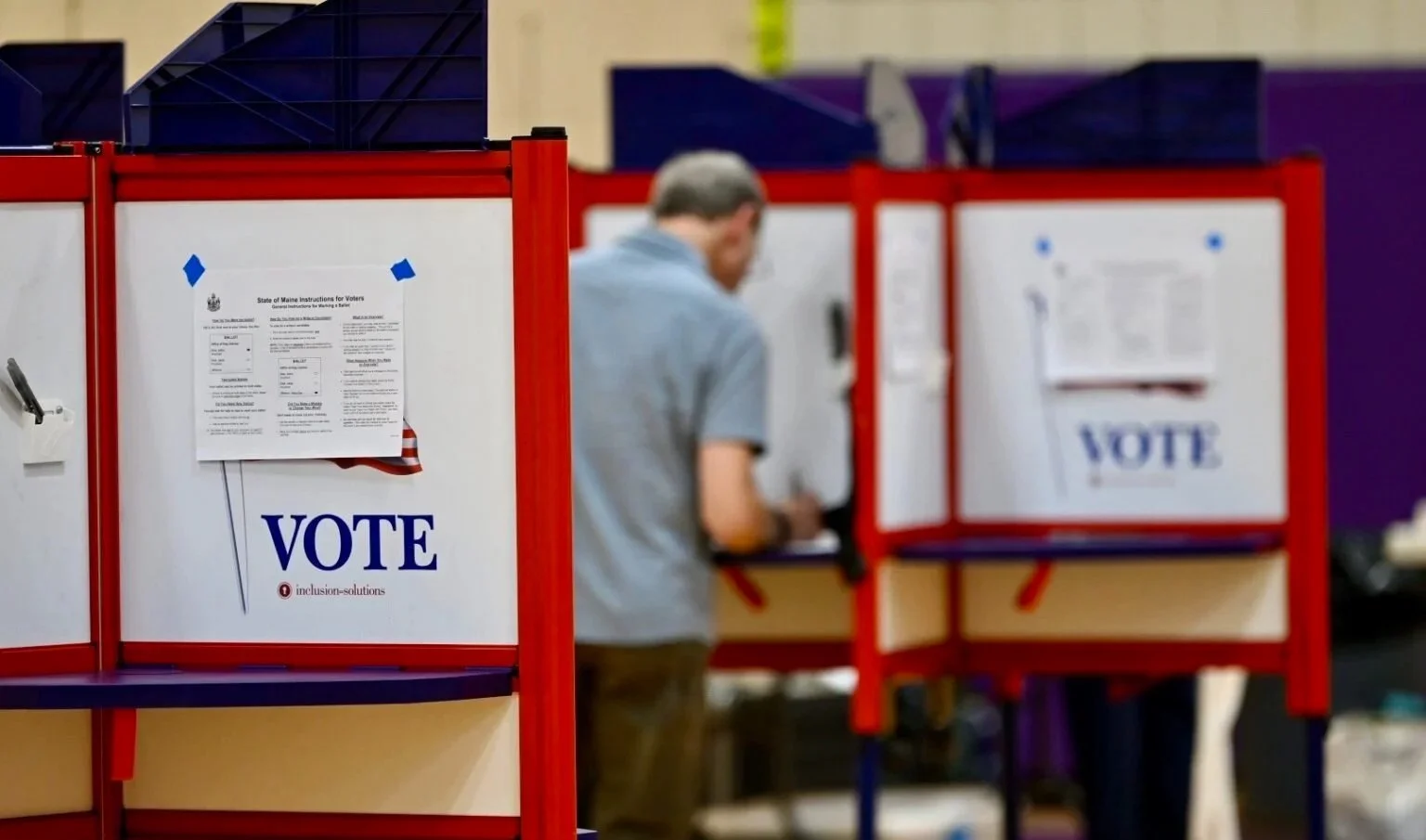
Today, it’s just a coincidence that Federal elections in the U.S. arrive on the first Tuesday after Halloween (when Congress set Election Day in 1845 for the Tuesday following the first Monday in November, there were no observances of this beloved holiday).
While most eyes are focused on federal elections and party control of the House (where the only debate is the size of the Democratic majority) and the Senate (which current polling portends what was unimaginable a year ago—likely four, and as many as six, seats flipping blue), what’s under the radar for most Americans, is control of state legislatures.
Across the 88 out of 99 legislative chambers that have elections this year, 57 are currently under Republican control, while 39 are under Democratic leadership. In eight of those chambers holding elections in 2026, the margin of control falls within only five seats. Which means potentially 14 changes in trifecta control (when both chambers and the governor’s office are held by the same party), either because supermajorities are broken, or chambers flip outright.
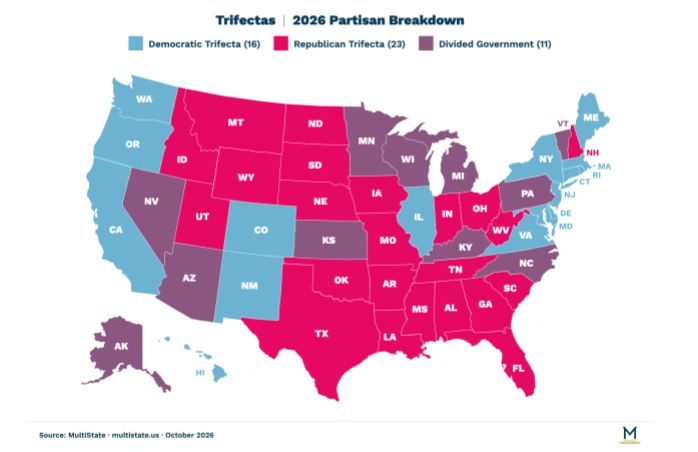
Arizona, Michigan, Minnesota, Nevadaⁱ, Pennsylvania, and Wisconsin are all states with divided party control currently, but which could all flip based on a handful of seats in either one and/or both chambers changing hands.
Clean fuel standards are currently on the table in three of these toss-up states: Michigan, Minnesota and Pennsylvania. For Michigan, the State House is four seats from a flip and Minnesota’s state House is currently tied. In Pennsylvania, there’s a three-seat Republican margin in the state Senate. The 2026 versions of the bills in Michigan and Pennsylvania have had bipartisan support.
Given recent record petroleum cost spikes, there’s a timely opening to make a compelling argument for the simplest way to insulate drivers from big swings in fuel prices, now and into the future. Give them the freedom to power their vehicles with cleaner, lower carbon options that compete directly with petroleum.
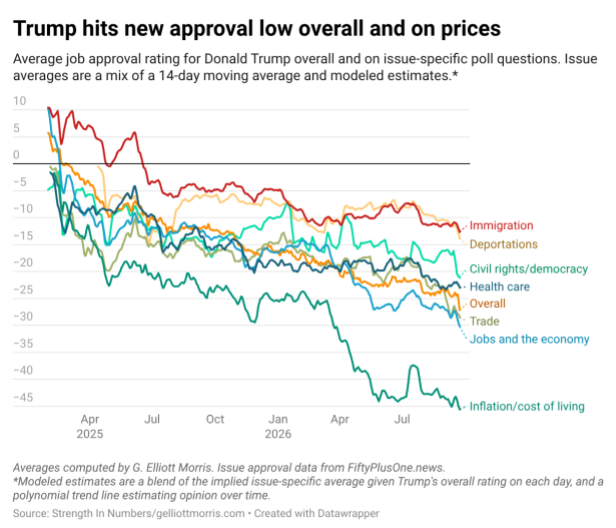
As far back as April of 2025, the primacy of inflation, costs, and affordability in this election and the corresponding blame and disapproval in the chart below afford a unique opportunity for clean fuel standards advocates to lean into an array of economic arguments for expanding low-carbon credit markets.
As noted in the recent Navigating the Politics of Costs “There’s clear evidence that clean fuel programs can reduce the cost of driving by creating fuel market competition with both electricity and lower-carbon liquid fuels like renewable diesel and ethanol.”
The current economic realities of sky-high gasoline and diesel prices once again draining American pocketbooks invite a proven solution. A change in legislative composition could open the door to these conversations that would help newly-elected lawmakers advance a proven, technology neutral and science-based decarbonization solution for transportation fuel—one that incrementally transitions our transportation sector without impacting costs for consumers.
Let’s hope the result of this election means state legislatures can start delivering treats for their constituents.
In 2027, state legislatures across the country, can (and should) leverage clean fuel standards. Doing so will stimulate private sector investments to promote much needed local economic development and revitalize rural agricultural communities. At the same time, CFS adoption will directly reduce the financial healthcare and human costs from cancer-, heart disease-, and asthma-causing air pollution, while also making vital progress on climate action.
Now more than ever, Americans are voting, and doing so in record numbers against high costs (and high fuel prices in particular) to demand the win-win solutions clean fuel standards make possible.
ⁱ In Nevada, a Democratic trifecta depends on the Governor’s race, which is considered competitive. Neither chamber in NV’s state legislature is currently a toss-up.