Building on LCFC Chair Lindsay Fitzgerald’s insightful mid-year update, I wanted to expand on the intricately connected themes of costs and politics. Foremost in our advocacy this year is rising costs. The double whammy of persistent inflation and increasing outlays for things like housing, electricity, food and fuel unsurprisingly complicates the political calculus for getting any bills across the finish line. The looming midterms will also scramble political realities across the country, including states that matter for LCFC advocacy.
A priority question from legislators has always been ‘how much will a clean fuel standard cost?’ Currently, that’s an existential question for any proposed bill.
We at the LCFC focus a lot on the question of cost. We funded the first comprehensive study to ask the foundational specific question of the actual vs. presumed relationship between Low Carbon Fuel Standard credit prices and retail gasoline prices. Real-world data shows that the LCFS is such a minor factor that credit prices have no impact on gas price trends in California. Its findings have been widely discussed, adopted by CARB and cited by others.
I also focus a lot on the truth (lower than predicted) and misinformation (inflammatory claims) about cost impacts. The most frustrating repetitive exercise is countering apocalyptic scaremongering of those who at the same time propose making the program MUCH more expensive by limiting the options to bring low-carbon fuels to market. These wildest—and, it turns out, least credible—claims always get the most publicity. Unringing that ideological clarion call is no small task. But it’s a necessary calling.
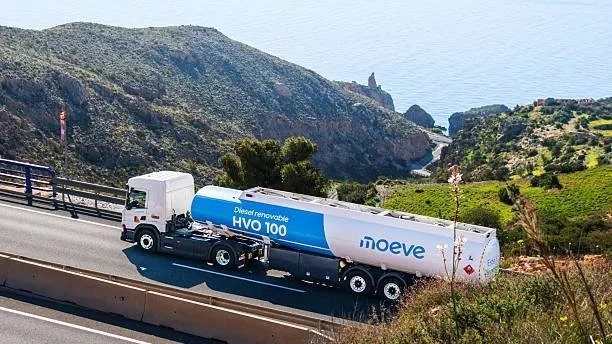
The other pillar of the cost discussion is more concrete. There’s clear evidence that clean fuel programs can reduce the cost of driving by creating fuel market competition with both electricity and lower-carbon liquid fuels like renewable diesel and ethanol. More drivers have personally seen the evidence by charging vehicles at home and work, or for instance by saving $1.50 a gallon or more in California by filling up with E85. But too many have not. Our task is to continue to publicize this reality.
Meanwhile, the midterms will undoubtedly play a significant role in determining what’s possible for 2027. States like Minnesota and Michigan have been largely dormant on the clean fuel standard chessboard due to split legislature-induced political paralysis. Another split legislature in Pennsylvania stalled a bill due to competing priorities. New York has been single-handedly derailed by the ideology of a retiring Assemblymember. All of these political dynamics will look different next year.
Cost will continue to be a significant concern. It will play out in different ways in different states with different politics. We will adapt. Echoing Lindsay’s confidence, “the LCFC is ready for that moment.”