
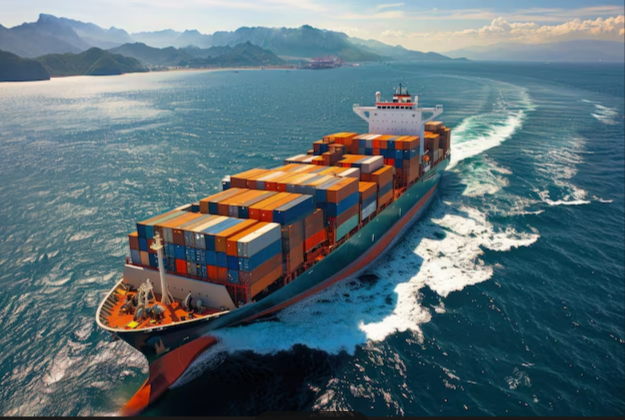
Hawaii's newly approved Clean Fuel Standards (CFS) legislation includes an "opt-in" provision for maritime fuels, in line with the programs in California and Washington. Which makes it tempting to look at the map now and at least play with the idea that these states could align policies to spur a reduction in the carbon impact of their shared ship traffic.
"Tempting" if not exactly "encouraging." State opt-in policies are helpful. For example, under California's LCFS program, with an opt-in for maritime fuel, the US Navy has been able to generate several million dollars in credits each year by ships plugging into shore electricity when docked in San Diego. But CFS programs by themselves prompt the most change to the degree that the fuel is fungible (as in the case with RNG), and when infrastructure changes are modest. Some ocean-going vessels and port facilities could potentially be retrofitted to work with different fuels. However, CFS programs alone won't spark the decades-long planning and finance commitment required to build new ships, new port facilities, and new storage. Also needed are consistent supplies of replacement fuel, be it methanol, hydrogen, ammonia, and so on. Crucially, government policy at the state, national and international levels needs to be stable, long-term, and reasonably well-aligned.
To that end, we might expect some encouragement for transition from the new federal 45Z regulations. Producers of alternative fuels deemed "suitable" for on-road or airplane use can claim credits even if that fuel is ultimately used by ships. Also in the works is bipartisan federal legislation, the Renewable Fuel for Ocean-Going Vessels Act (S. 881), which would allow producers of alternative maritime fuels to retain their RIN credits from the federal Renewable Fuel Standard if the fuel gets used by ocean-going vessels. Clean fuel program credits (in states where they exist) can stack with RINs to increase the financial incentive to switch.
Right now, surely the key action to track is the reopened deliberations of the International Maritime Organization (IMO). The international body of 176 countries has charged itself with adopting programs to reduce emissions from global shipping to net zero by 2050, with several tough milestones along the way. Negotiations last year adjourned in exasperation, with supporters of an international carbon tax (the EU and Brazil) clashing with the opposing oil-producing countries and "flag states" of Liberia and Panama. China is working its own angles but nonetheless supporting the process. Not surprisingly, the US is behaving like its current weird self: throwing elbows, bashing global agreements of any kind, and tapping one guy's shoulder over here then blaming that guy over there.
Here's a good write-up of the situation in the UK publication Carbon Brief. It's almost like following the World Cup, minus the rowing Norwegians. As it happens, Norway, despite being an oil producer, is on board with the IMO carbon tax proposal.